

BEYOND GEOMETRY
IS CUTTING AN AESTHETIC LANGUAGE?
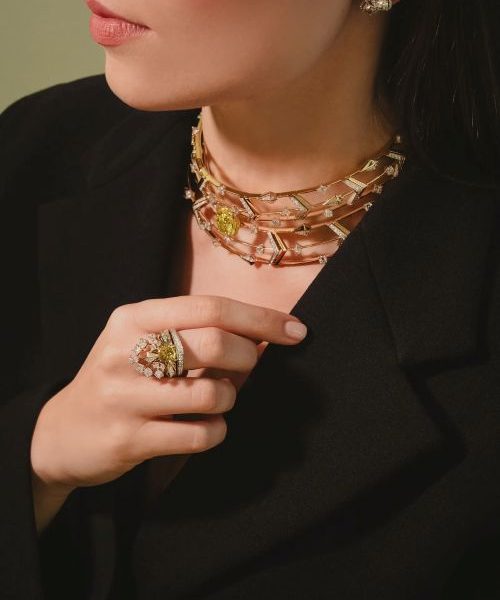
In diamond design, cutting is often perceived as a technical detail; however, today it has become one of the most powerful aesthetic decisions that define the character of collections. For designers, shapes such as emerald, cushion, or pear now define not only light performance but also the stone’s posture on the body, the direction of the style, and the feeling conveyed by the jewelry. Therefore, it is no coincidence that the same cuts appear with completely different narratives in different maisons; it is a conscious choice of design language.
The architectural simplicity of stepped cuts, in particular, creates a powerful expressive language in modern collections. Cuts with clear lines, such as the emerald cut, allow for a minimal yet bold aesthetic, while the sense of depth within the stone ensures that light moves across the surface in a controlled manner. This approach elevates the cut from a purely technical decision to an element that defines the character of the collection.


In contrast, the cushion cut, with its soft corners and romantic history, creates a more emotional narrative. This form, reminiscent of vintage references, creates a balanced expression between nostalgic and modern when combined with contemporary settings. For designers, the cushion cut stands out as one of the natural ways to connect with the past.
More dramatic silhouettes like pear and marquise stand out for creating a sense of movement and direction. The effect of the elongated form on the finger, in particular, lends the design both an elegant and theatrical character. These cuts redefine not only the shape of the stone but also the relationship the jewel establishes with the body.
Today, designers view the cut not as an area of innovation in itself, but as a vehicle for different aesthetic approaches. In this approach, the cut is not a trend; it becomes a building block that sets the rhythm of the design. The same geometric form can be reinterpreted with different settings, proportions, and material choices to tell a different story in each collection.