


A BOTANICAL ATLAS-The floral passıon of hıgh jewelry
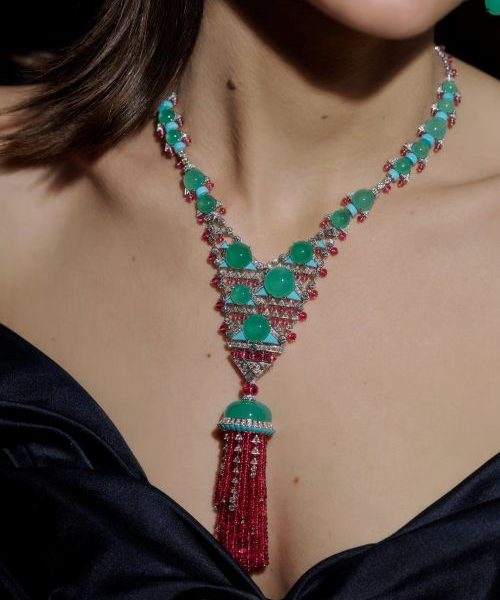
Dior Joaillerie’s delicate rosebuds, Boucheron’s climbing vines and thistles, Van Cleef & Arpels’ symbolic clover, Cartier’s iconic cacti… From the mood boards of the world’s most prestigious jewelry houses, it would be entirely possible to assemble a full botanical atlas. Let us revisit some of the most iconic jewels of the past and present, created by master artisans inspired by the rich flora of our planet.
The tradition of transforming flowers and plant motifs into ornaments dates back to humanity’s earliest centuries, to times when festive wreaths, natural necklaces, and floral garlands were crafted by hand. This fascination has never lost its relevance. Julius Caesar and, twenty centuries later, Napoleon, famously wore laurel wreaths made of solid gold.
In the Middle Ages, motifs such as lilies, camellias, and roses were widely used as symbols of power, appearing on noble family crests and royal crowns alike. Looking at historical records, ruby and sapphire crowns resembling ivy wreaths worn by Bavarian and Danish queens stand out. Most notably, the exquisite diamond diadem of Russian Empress Maria Fyodorovna, formed of interwoven rye ears and flax stems offers one of the clearest examples of the rise.
By the late 19th century, floral motifs once again became haute fashion among the aristocracy. Jewelers were flooded with commissions for elaborate flower crowns and exotic bud-shaped brooches. Over time, the opulent Victorian style gave way to Art Nouveau and Art Deco, followed by Brutalism, Postmodernism, and High-Tech aesthetics. While each era introduced new ideas and forms, nature remained a constant source of inspiration and an enduring trend.
The first name that comes to mind when it comes to garden-inspired collections is Van Cleef & Arpels. In the maison’s jewelry herbarium, the undisputed star is the clover, specifically the iconic four-leaf clover of the best-selling “Alhambra” collection.
Cartier, too, demonstrates its mastery of nature-inspired design; the “Cactus de Cartier” collection, centered around the rounded Mexican cactus, is proof enough on its own. Meanwhile, American house Tiffany & Co. releases its Blue Book high jewelry collections each year, always featuring a special “Botanica” chapter devoted to and inspired by the plant kingdom.
Dior Joaillerie’s Creative Director Victoire de Castellane enriches the brand’s jewelry portfolio each year with precious roses, paying tribute to Monsieur Dior and to his mother, who cultivated a flawless rose garden at their home in Granville. The flowers Victoire creates appear almost alive, the only difference being that you needn’t fear the thorns on their white and yellow gold stems.
Italian jewelry house Bvlgari has been bringing flowers and plant motifs to life in its collections since the early 20th century. In 2019, it introduced the “Fiorever” collection, which quickly gained fame for its modern reinterpretation of the four-leaf clover. A symbol of joy and good fortune, this motif was frequently used in mosaics and frescoes adorning palaces and garden pavilions during the Imperial erai giving it deep significance for modern Romans, who remain profoundly connected to their history.
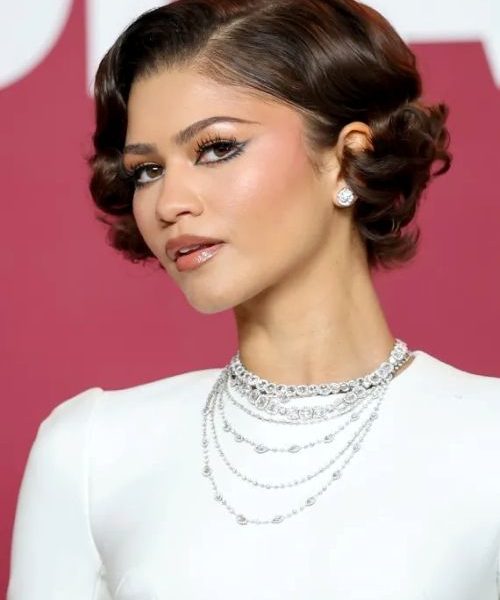
Swiss brand Chopard is equally devoted to floral themes. Each year, Caroline Scheufele, Co-President and Artistic Director of the Jewelry Division, designs complete floral sets for the maison’s “Red Carpet” high jewelry collection. Among the most recent floral collections presented by the giants of the jewelry world is “Impermanence,” unveiled in 2025 as part of French maison Boucheron’s “Carte Blanche” series. The protagonists of the collection are wildflowers, accompanied by nature’s smaller inhabitants, caterpillars and insects. Brought to life under the vision of Creative Director Claire Choisne, these pieces ranging from bracelets and shoulder brooches to hair accessories are not merely aesthetic adornments; they also serve as poignant reminders of nature’s fragility and the necessity of protecting it.